A Sephardic Love Story–Eggplant Burekas
The transmission of these bureka recipes from generation to generation is a way of retaining heritage and history in Sephardic communities around the world.
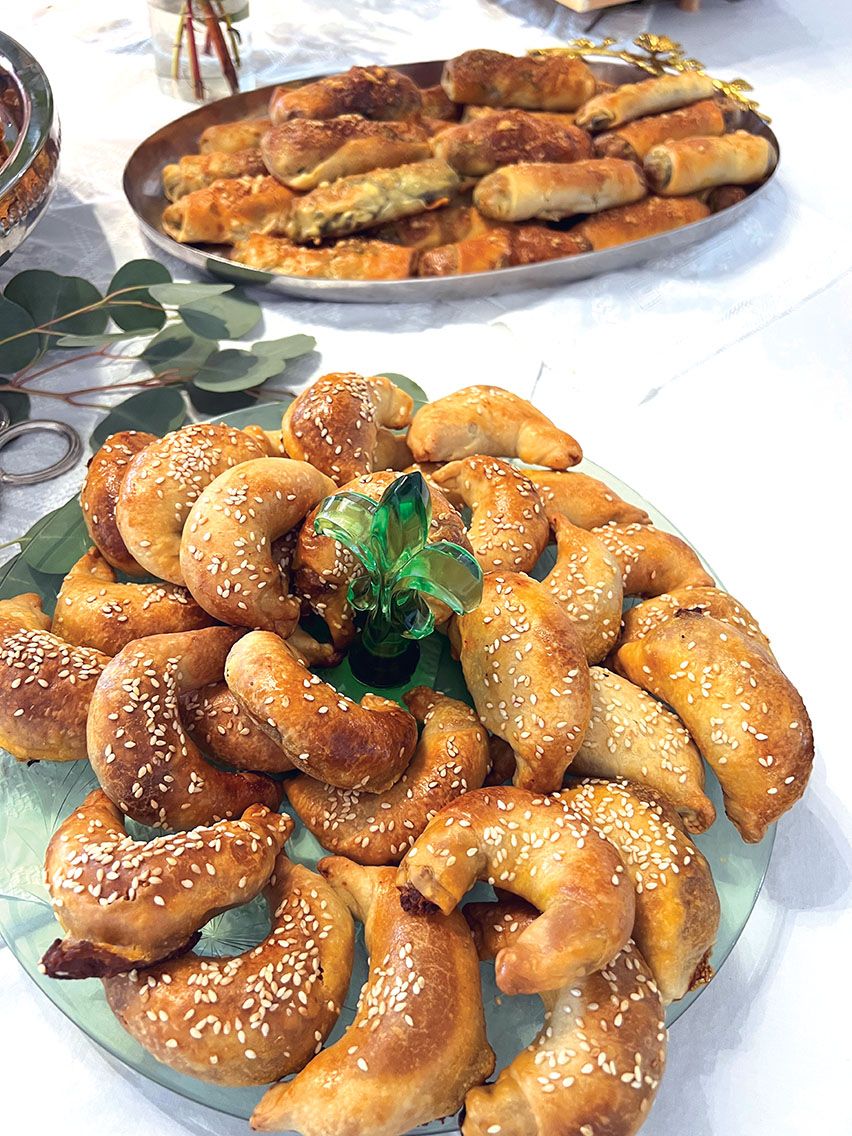
Let us introduce you to the original bureka. The bureka is a tangible, edible reminder of the Expulsion of the Jews from the Iberian peninsula in 1492. The shrewd Sultan Bayezid II welcomed them into his Ottoman lands, encouraging the Jews to settle in major cities like Thessaloniki and İzmir. There, they encountered the assorted cheesy, spinach, eggplant and meat burek pie fillings of the Ottoman kitchen. They created a culinary mashup by incorporating them into the flaky short-crust dough of their cherished Spanish empanada, thus inventing the bureka.
The descendants of these Sephardic Jews brought the recipe for burekas with them when they began to settle in pre-state Israel. Sami Alcolombry, a Bulgarian Jewish immigrant, began selling his mother’s burekas from a baby stroller in the streets, then a bicycle, before opening a small, extremely popular shop in Jaffa. By the 1970s, there were 80 branches of Sami Borekas, introducing Bulgarian-style phyllo dough and commercially manufactured puff pastry burekas to mainstream Israel.
Burekas became an iconic Israeli staple. Like the widely available street foods of falafel, sabich and shawarma, burekas were filling, portable and affordable.
—Rachel and Sharon
Once upon a time, the Los Angeles Sephardic community thrived in South Central. Yes, Crenshaw Village and Leimert Park were once the hub of the Sephardic community! Many of the residents, like my husband Neil’s grandmother Victoria, were Ladino-speaking immigrants from the tiny island of Rhodes. His grandfather, who was from Bulgaria, also spoke Ladino, so Neil grew up speaking Ladino.
(Ladino, or Judeo-Spanish, is an endangered Romance language, originating from 15th-century Old Castilian Spanish mixed with Hebrew, Turkish, Greek and Arabic. Following the 1492 expulsion from Spain, it developed in the Ottoman Empire, serving as a vital cultural, literary and spoken language.)
In 1980, Neil was a junior doing a year of study abroad at the Hebrew University in Jerusalem. Most of his fellow students and friends in the program were orthodox Ashkenazi Jews from different cities around the United States. Each floor in the dorms shared a common kitchen, with a stovetop and fridge. (Neil kept a toaster oven on his desk.) One of the things Neil really missed were his mother’s delicious homemade burekas, especially the handrajo (eggplant) burekas he grew up with. He considered the burekas that were sold at Shuk Machne Yehuda and the supermarket as “fake”!
The burekas Neil craved were the authentic Sephardic version, burekas crafted with a flaky, crumbly dough made with flour, oil, salt and water.
When he described his mother’s eggplant burekas and how they were so different (better) than the puff pastry burekas, his classmates asked him to bake some.
He called his mother and she told him that the recipe was one eggplant, one onion and one tomato, seasoned with salt and pepper. The recipe for the dough sounded simple as well.
One night, Neil and a few girls made the filling in the common kitchen, then took it to his room where all their friends were gathered. He doesn’t remember how they managed to make the dough, but they did. They stuffed the dough with the filling and baked four burekas at a time in the toaster oven. The project took all night. But all of them loved his mother’s Sephardic burekas.
Neil making burekas in the dorm
Funnily enough, I think a part of the reason I fell in love with Neil were the delicious, flaky, burekas that his mother Becky so lovingly fed me.
The transmission of these bureka recipes from generation to generation is a way of retaining heritage and history in Sephardic communities around the world. A reminder of the generations before us and the journey they took.
The eggplant in this bureka recipe is called Handrajo, which literally means “a rag” or something worn-out or shabby. My guess is that this eggplant filling was named handrajo because it is cooked down until it melts and looks like nothing. But far from being shabby, the eggplant filling is delectably creamy and so flavorful. Encased in that crispy and flaky dough, these eggplant burekas are simply irresistible.
—Rachel
Sephardic Eggplant Burekas
Eggplant filling (handrajo)
1 large eggplant, peeled and cubed
1 large onion, thinly sliced
1 large tomato, peeled and diced or 2 Tbsp. tomato paste
3 Tbsp. avocado or vegetable oil
1 tsp salt
1 medium russet potato, boiled and mashed
½ cup grated parmesan cheese
1 egg
Warm oil in a pot over medium heat. Add onion and sauté until caramelized into a deep golden color.
Add the eggplant and sauté for a few minutes, until they start to soften.
Add the fresh tomato (or tomato paste for deeper flavor) and simmer for 10 minutes or until eggplant is very tender and has a jam-like consistency.
Allow the vegetable mixture to cool , mash up so that there are no large pieces and add the mashed potato, salt and grated cheese.
Taste and add salt and cheese, if desired.
Dough:
1 cup ice cold water
3/4 cup avocado or vegetable oil
1 1/2 tsp kosher salt
3 cups all purpose unbleached flour
1 egg, beaten for egg wash
Sesame seeds
In the bowl of a stand mixer, use the dough hook and slowly mix the water, oil, salt and flour until the dough comes together, about 3 minutes.
On a lightly floured surface, gently knead the dough.
Form the dough into walnut-size balls and place on a parchment lined baking tray.
Cover the balls with a clean dish towel and allow to rest for 30 minutes.
Preheat the oven to 350°F.
Use a rolling pin, form the dough into long oval shapes.
Place one teaspoon of filling at the bottom of the dough.
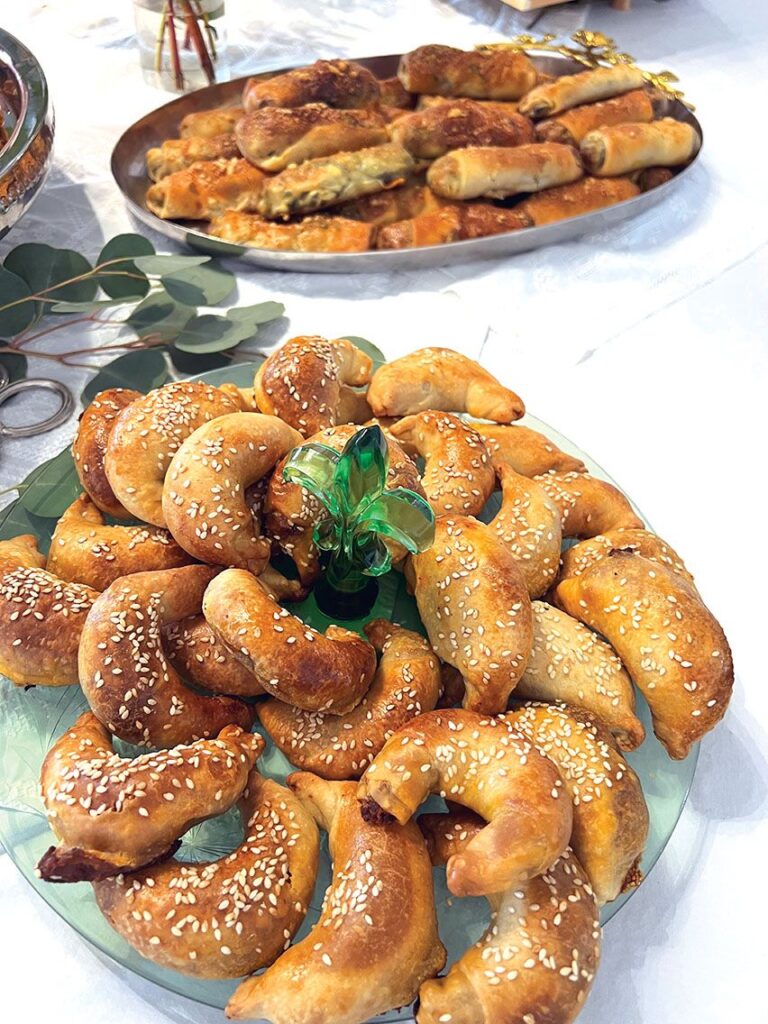
Lift and roll dough upwards, then pinch the ends and bring in to form a crescent shape.
Brush tops of the burekas with egg wash.
Sprinkle with sesame seeds.
Bake for 20 to 25 minutes, until crispy and golden brown.
Note: Be sure that the bureka is well secured by pinching ends tightly so that the mixture does not seep out.
Sharon Gomperts and Rachel Emquies Sheff have been friends since high school. The Sephardic Spice Girls project has grown from their collaboration on events for the Sephardic Educational Center in Jerusalem. Follow them
on Instagram @sephardicspicegirls and on Facebook at Sephardic Spice SEC Food.