A Warm Hug in the Sukkah: Stuffed Onions
On Sukkot, there is a tradition of eating stuffed foods from vegetables to pastries.
These cooler, amber-infused days of autumn lend themselves perfectly to the outdoor festival of Chag ha’Sukkot (Feast of Tabernacles). This holiday, a reminder of the Jewish people’s 40 years of wandering in the desert, symbolizes the temporary nature of life. Just as the sukkah is the only mitzvah that completely surrounds us, the sukkah is symbolic of HaShem’s embrace. Sukkot is also referred to as Chag Ha’Asif (Feast of Gathering), when the last grains and fruits were harvested in Israel.
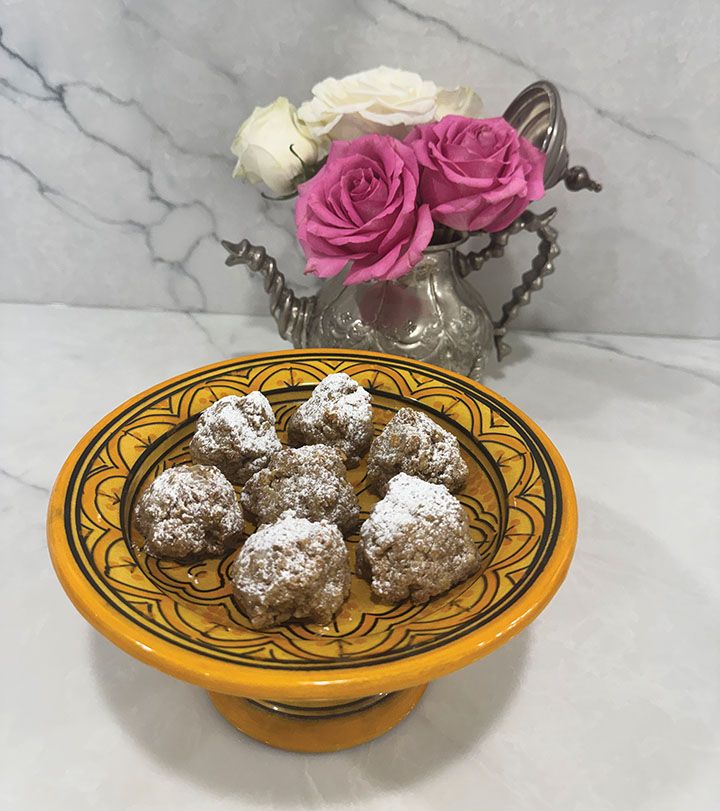
On Sukkot, there is a tradition of eating stuffed foods from vegetables to pastries (think kreplach, stuffed cabbage, rugelach, dolmas and ma’amul).
These foods represent the agricultural abundance of the season, as well as the idea of being “wrapped” in the sukkah and HaShem’s “hug.”
This Sukkot, I will be serving my friends and family ma’hasha, delicious meat & rice stuffed veggies. I remember the great pleasure my Nana Aziza had in making ma’hasha for the holidays. She lovingly stuffed grape leaves and cabbage, baby peppers and zucchini, tomatoes and onions. And then she would slow braise the stuffed vegetables in a sweet and sour sauce resulting in a luscious melding of savory meat and soft caramelized vegetables.
It is thought that preparing dolma — stuffed vegetables — dates back to ancient Knossos, Crete. Recipes for stuffed eggplant are featured in the medieval Baghdadi Arab cookbook, Kitab al-Tabikh (“The Book of Dishes”) which was written by Muhammad bin Hasan al-Baghdadi around 1226.
In the Ottoman Empire, dolma were the height of culinary refinement, and initially were only served in the Sultan’s court at the Topkapi Palace. But over time, stuffed vegetables became widespread throughout the Ottoman Empire, with many regional variations.
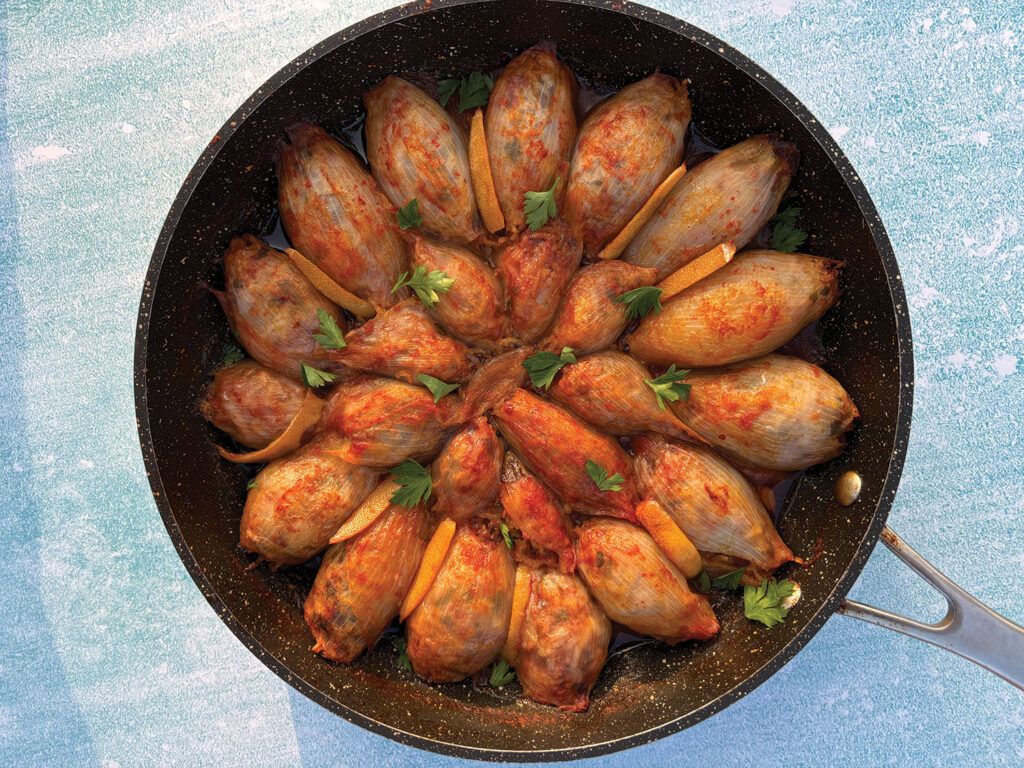
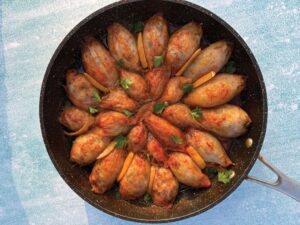
Most dolma recipes call for a simple tomato-based sauce. But Baghdadi Jewish culinary traditions were influenced by migrations and trade through India, so this recipe for stuffed onion ma’hasha has a delectable sweet and sour profile. The stuffing includes ground beef and rice, pine nuts, parsley and mint, fresh chopped lemon flesh and Silan (date molasses), fresh tomatoes and tomato paste, cinnamon and sweet paprika. Everything simmers in a flavorful sweet and sour broth that perfectly complements the savory ground beef and rice stuffing and the subtle sweetness of the caramelized onions.
The recipe takes a little patience but the mouthwatering results are worth it.
Rachel and I wish you a joyous Sukkot festival, filled with delicious food, good friends and happy family.
—Sharon
Nana Aziza’s M’hasha
Stuffed Onions
Tomato Broth
1 3/4 cup boiling water
2 Tbsp tomato paste
1 Tbsp Silan
1 tsp salt
1/4 cup lemon juice
In a large measuring cup, dissolve the tomato paste, sugar, and salt in the boiling water. Add the lemon juice and stir to combine well. Set aside.
3 large white onions, peeled
1/2 lb ground beef
1 cup basmati rice
1 cup chopped tomato
1/2 cup finely chopped Italian parsley
1/2 cup mint, finely chopped
1/2 cup pine nuts
1/2 lemon, peeled and chopped
1/4 cup tomato paste
2 garlic cloves, minced
2 Tbsp organic Silan
1/2 cup extra-virgin olive oil, divided
1 tsp kosher salt
1/2 tsp black pepper
1 tsp ground cinnamon
1 tsp sweet paprika
Lemon peel, for garnish
Soak rice in cold water for 30 minutes, then drain and set aside.
Use a sharp knife to cut a lengthwise slit that reaches the core of the onion. Place the onions in a pot filled with cold, salted water, then bring to a boil over high heat. Cover the pot, reduce heat and cook for 10 minutes. Drain the water and set aside.
Preheat oven to 300°F.
In a large bowl, combine the ground beef, rice, tomatoes, parsley, mint, pine nuts, lemon, tomato paste, garlic, Silan, 1/4 cup olive oil, salt and pepper, cinnamon and paprika.
Pour remaining olive oil into a large skillet.
Peel a layer of the onion shell and stuff with 2 tablespoons of the ground beef mixture. Roll the onion shut and place the onion along the outer edge of the skillet.
Continue stuffing the onion shells and place in a circular pattern in the skillet. Save the small inner onion shells for the middle of the skillet. Garnish the stuffed onions with lemon peel. Pour the broth over the stuffed onions.
Cover with a layer of parchment paper and a lid or a layer of heavy duty aluminum foil.
Roast in the oven for 60 to 90 minutes, until meat is cooked.
Sharon Gomperts and Rachel Emquies Sheff have been friends since high school. The Sephardic Spice Girls project has grown from their collaboration on events for the Sephardic Educational Center in Jerusalem. Follow them
on Instagram @sephardicspicegirls and on Facebook at Sephardic Spice SEC Food.