A Diploma and A Fava Bean Spring Pasta Dish
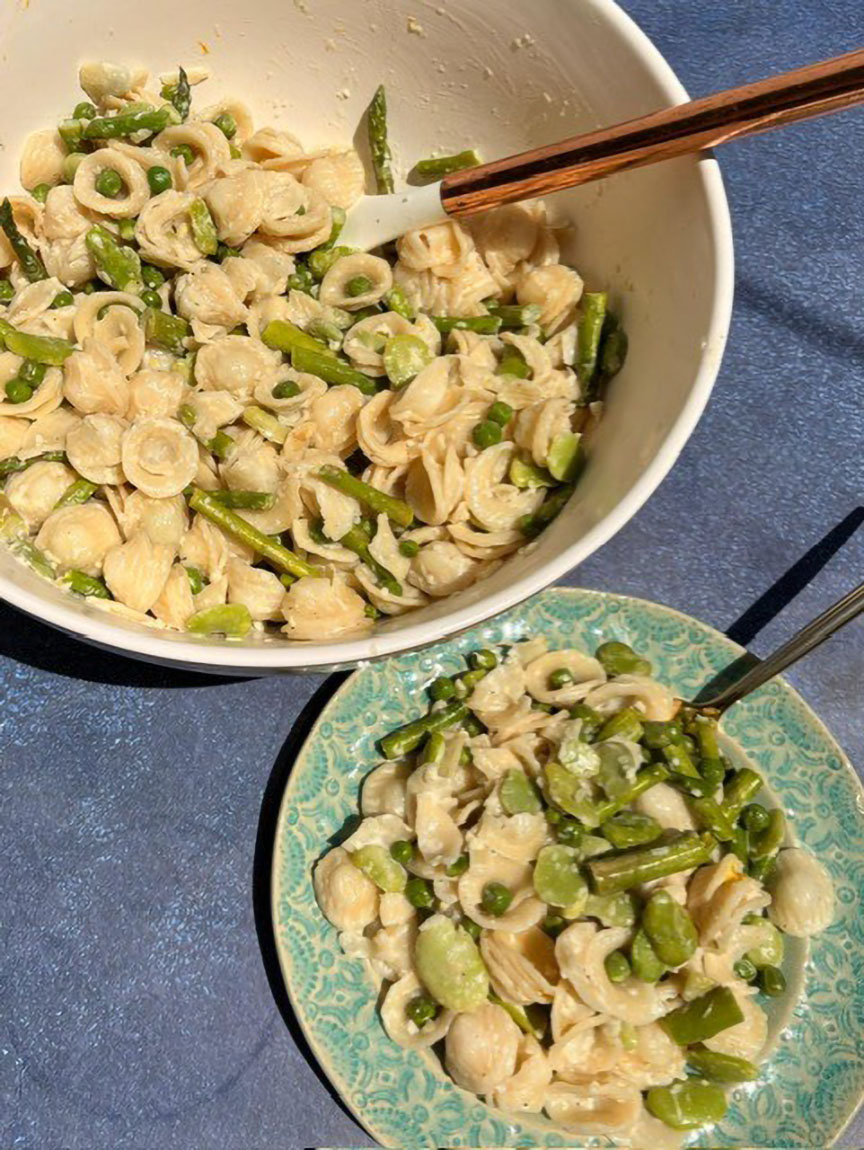
This creamy, saucy pasta is a perfect way to showcase the delicate green vegetables of spring — fresh asparagus, green peas and fava beans.
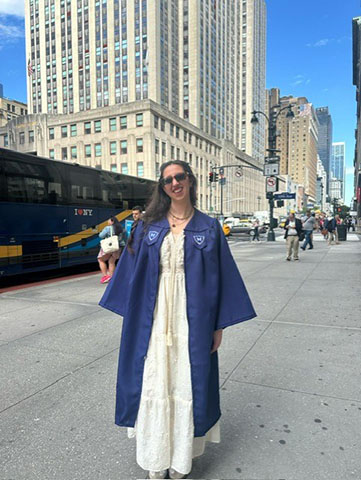
Last week, I flew to New York to attend my eldest daughter’s graduation from my alma mater, Yeshiva University.
Of course, every trip to NYC is just an excuse to eat at as many kosher restaurants as you can. We started the celebrations with Gabriella’s friends with Sunday lunch at Tiberius, a dairy restaurant in Midtown. The eating continued with a fun dinner with her friends at Le Marais, a classic French steakhouse. She and I ate twice at Spicy Moon, an inexpensive kosher vegan Chinese joint. We had a memorable lunch at Libbi’s, an upscale dairy restaurant on the Upper East Side. And a celebratory meal with my brother Rafi, my niece Devorah and her husband Daniel at Malka, Israeli chef Eyal Shani’s extremely popular restaurant on the Upper West Side. His mashed potato stuffed schnitzel, smashed potato carpet, focaccia and hummus are not to be missed.
We shared a fun sushi lunch with my cousin Rachel. I even received a delivery to the hotel of an incredible hors d’oeuvres platter from Mazza and More. I couldn’t resist sampling their delicious, classic Syrian mezze of meat sambusak, kibbe and lahmajin, with homemade tahini.
The culmination of our trip was seeing our daughter and her friends in their navy blue cap and gown enjoying every moment of graduation. It was truly memorable with great speeches by Rabbi Dr. Ari Berman and the American Ambassador to Israel Governor Mike Huckabee, followed by singing from Joey Newcombe and the Thank You Hashem band, accompanied by “Brother Mike” on the bass guitar.
Can it be a Jewish event if there is no hora dancing? There was hora dancing.
The whole thing was very emotional and the tears streaming down my face washed away any trace of makeup. Alan said allergies were responsible for his tears.
Aren’t vacations fun? I loved visiting my favorite NYC landmarks: Fifth Avenue, Central Park, the Frick Collection and the Metropolitan Museum of Art.
I especially loved not having to cook (and shop and clean). And the best part is that I can claim it as research for my role as a Sephardic Spice Girl.
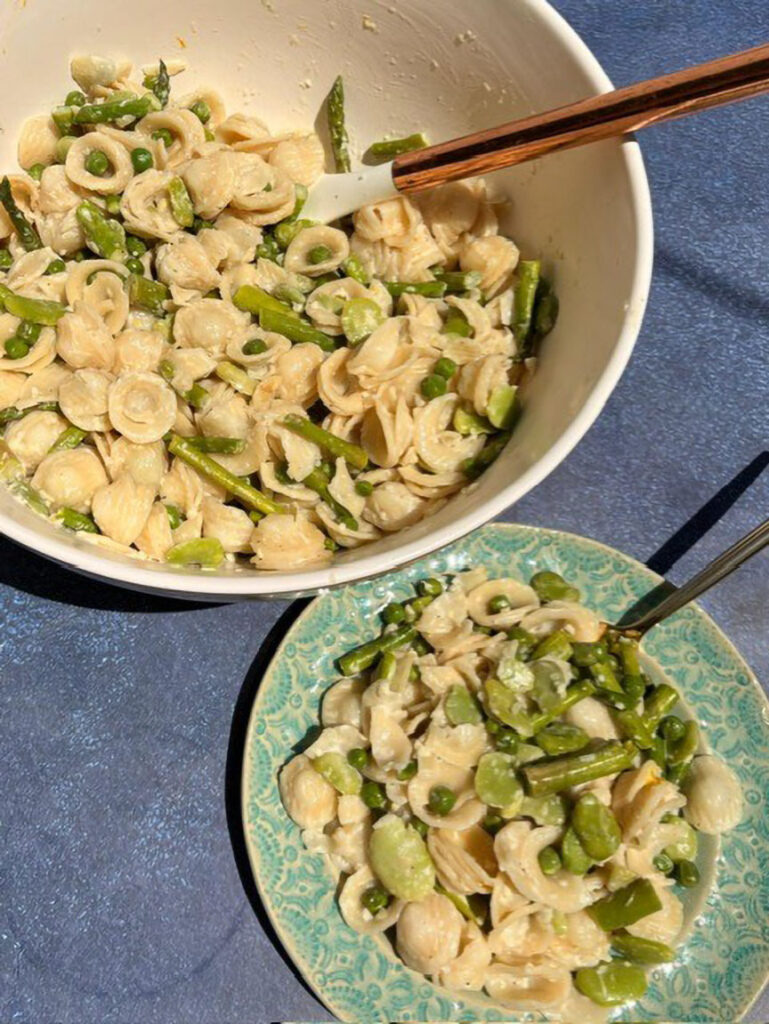
It is in this vein that we offer you this recipe for a fabulous dish I ate in Manhattan, Asparagus, Fava Bean and Pea Orecchiette. To be honest, this dish is the opposite of what I normally cook for my family. I rarely make pasta, I never cook with cream and I never, ever serve fava beans (my grandmother Nana Aziza always forbade them because my uncle Menashe suffers from an enzyme deficiency called favism).But this dish was so, so good that I had to faithfully recreate it for my family when I came home.
Interestingly enough, some historians trace the birth of the orecchiette pasta to the Norman-Swabian period in Sannicandro di Bari, where there was a fusion between local culinary traditions and the Jewish community, who made a concave pastry known as “Haman’s ears.”
This creamy, saucy pasta is a perfect way to showcase the delicate green vegetables of spring — fresh asparagus, green peas and fava beans.
—Sharon
Early in our marriage, Neil and I were sitting for dinner at my parents’ table and my mother served fava beans. Neil reacted with genuine alarm, stating “I don’t eat fava beans. They’re dangerous. I could die!”
I was completely stunned. I had never heard anything so dramatic about the humble fava bean.
In our Sephardic Moroccan home, fava beans found their way into Friday night fish dishes, salads and countless family meals. Every Passover, my mother’s fava bean soup was a cherished tradition. Fava beans were part of the flavors of my childhood and remained a favorite into adulthood.
In my family, fava beans were beloved. For Neil’s family, they spelled danger.
For years afterward, Neil never touched any dish with fava beans. He avoided them so completely that I rarely cooked them at home.
This strict warning about the dangers had been passed down through generations. Whether or not anyone fully understood the medical explanation, the message was clear: fava beans were not to be eaten.
Several years ago, I was craving my mother’s Passover fava bean soup. I decided to make a huge pot. True to form, Neil declined, while the rest of my extended family happily scraped every last drop from their bowls. Since then, the soup has resumed its place as a Passover tradition.
This year, I decided it was time for a small experiment. Convinced that nothing would happen, I completely blended the fava beans into the soup and served Neil a bowl. He couldn’t see them and he couldn’t pick them out. He tasted the soup and declared it delicious.
Then we waited. Nothing happened. He enjoyed every spoonful, suffered no ill effects and, most importantly, lived to tell the tale.
This experience made me reflect on the fascinating history behind what many Sephardic families call the “fava bean disease.” It is an acute form of hemolytic anemia triggered by eating fava beans or inhaling the pollen of the fava bean plant. It affects populations originating in the Mediterranean, the Middle East and Africa and it mostly affects males.
In communities stretching from Morocco to Rhodes, Persia to Iraq, stories about the dangers of fava beans were passed down long before anyone understood genetics or knew about G6PD deficiency. Some families had real medical reasons for avoiding them; others inherited the warning without ever knowing whether they carried the condition themselves.
What struck me most was how differently two Sephardic communities viewed the same food. In Morocco, fava beans were cherished and celebrated. In Neil’s Rhodesli family, they were treated with suspicion and fear. The same bean carried entirely different meanings depending on the memories and experiences that had been handed down.
Sometimes family traditions preserve important medical knowledge. Other times they preserve caution long after the original reason has been forgotten. Either way, those traditions become part of who we are.
And in our family, after one bowl of blended Passover soup, the fava bean may finally have won.
—Rachel
Asparagus, Fava Bean and Pea Orecchiette
16 oz orecchiette pasta, cooked according to package directions, reserve 1/2 cup pasta water
1 cup fresh peas
1 cup frozen fava beans
12 oz asparagus, cut into 1 inch pieces
4 Tbsp butter
6 large garlic cloves, minced
1 cup heavy whipping cream
1 lemon, juiced
2 tsp salt
1/2 tsp ground black pepper
1 cup grated Parmesan, plus more for serving
Place peas in a small pot and cover with water and bring to a boil. Cook for 5 minutes, then drain and set aside.
Blanch fava beans in boiling water, then drain and set aside.
Blanch asparagus in boiling water, then drain and set aside.
In a large skillet, melt butter over medium heat. Add garlic and sauté until soft and golden. Add the cream, lemon juice, salt and pepper, pasta water and Parmesan cheese. Stir well to form a creamy sauce. Add the peas, fava beans and asparagus and pasta and stir well to coat with sauce.
Serve immediately with freshly grated Parmesan.
Sharon Gomperts and Rachel Emquies Sheff have been friends since high school. The Sephardic Spice Girls project has grown from their collaboration on events for the Sephardic Educational Center in Jerusalem. Follow them
on Instagram @sephardicspicegirls and on Facebook at Sephardic Spice SEC Food