A Purim Bread to Gladden the Heart
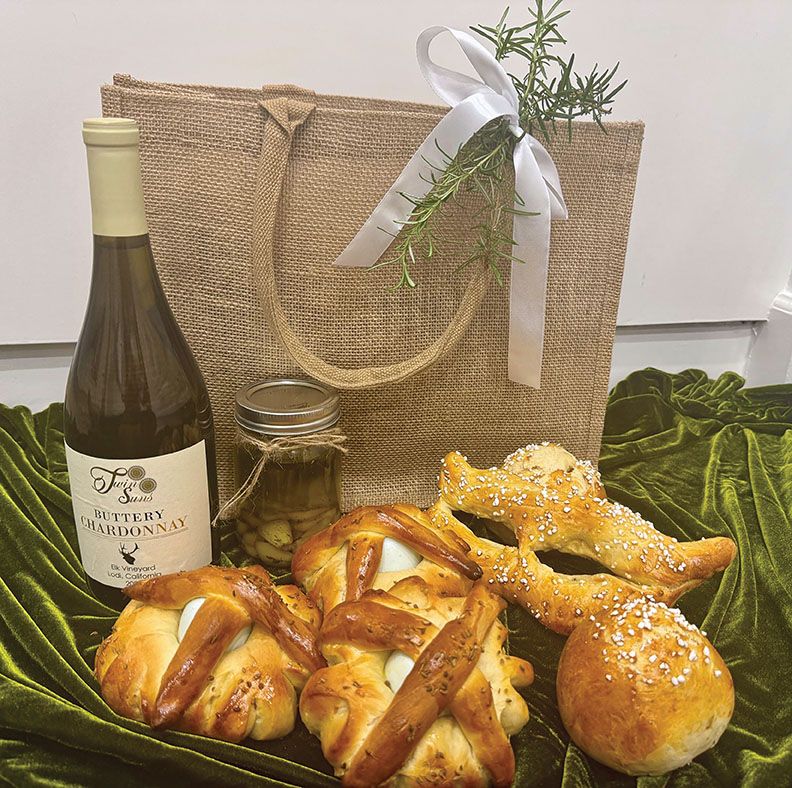
For Purim, the Jewish communities of North Africa bake a special Purim bread roll called Ojos de Haman (eyes of Haman), with a whole egg cradled in the bread, with two strips of dough on top forming an X.
The first time I remember receiving a mishloach manot is as a very young girl in Sydney. My father was very amused, having fun unwrapping the cellophane and revealing the many items from the gigantic basket to me. There was a huge pineapple and clusters of green grapes, apples, oranges and pears individually wrapped in tissue paper. There were many kinds of candy and biscuits (cookies), dried fruit and nuts and even a big bottle of grape juice.
This windfall of goodies seemed like a miracle to me. My mother was a “MAHA” mom, decades before anyone had heard of RFK Jr. She was the kind of mom who baked whole wheat bread filled with grains and homemade granola bars filled with seeds. Our refrigerator was filled with a lot of greens and the only prepackaged foods were milk, yogurt and cheese. She did buy me and my brother black licorice and potato chips (she was especially fond of the salt and vinegar flavor).
I remember my father explaining the Purim story to me and explaining that it is a mitzvah to give mishloach manot.
Of course, the amazing basket was from my grandparents, Aba Naji and Nana Aziza.
My grandmother also sent a big brown paper bag filled with her homemade baked Babylonian Jewish goodies. There were her crispy ba’ba tamar, date-filled crackers, sambusak bil jib’n, baked turnovers stuffed with a mix of salty, creamy cheese, and ka’ak, salty ring crackers.
The rabbinic dictum to give gifts of food (mishloach manot) to friends and family meant that across the Middle East and the Mediterranean, our Sephardic grandmothers would spend days baking sweet and savory delicacies to give to friends and family.
Nowadays, I have the good fortune of the community Purim Bake at Kahal Joseph, the Iraqi community synagogue. Rachel and I go every year and we join my mother and all the other beautiful members in baking the exact same recipes that were baked for generations in Iraq. The best part is hearing the wonderful conversations in Judeo-Arabic, the language that both my grandmothers spoke to me. It’s powerful to watch this baking legacy transmitted from the older generation to the enthusiastic young boys and girls who come to bake.
—Sharon
For Purim, the Jewish communities of North Africa make fijuelas, a sweet fried dough dipped in a honey syrup. They also bake a special Purim bread roll called Ojos de Haman (eyes of Haman), with a whole egg cradled in the bread, with two strips of dough on top forming an X.
The Ladino tradition for Purim is to bake biscocchos, bourekas and fulares, a bread-based roll holding a hardboiled egg with crisscross strips of dough over the egg representing either the caged Haman or the hanging of Haman.
My mother Rica was an expert in frying fijuelas, twirling the dough around a fork in the sizzling oil. She also made these little breads every Purim, no matter what. It was her very special family tradition.
One Purim, in our early years in America, she got home from work and realized that she had forgotten to make dough to bake them. She was so upset. But my clever mother found a solution. She made a small amount of dough with water, flour, yeast and salt. She took bagels from the freezer and boiled some eggs and she assembled Ojos de Haman. She rolled short dough ropes to crisscross over the egg that she had placed in the bagel hole, then she baked them. They weren’t the usual delicious rolls but we still enjoyed them.
In the last years of her life, I took on the job and I really believe it brought her a lot of joy and comfort to see that I was carrying on this fun and wonderful family tradition.
Nowadays, I make sure to bake extra for my cousins. This is a food that touches all of us in the deepest way. A reminder of my aunt and my mother who made it when we were kids. It doesn’t matter if we don’t eat the eggs. These Ojos are pure joy to have on the festive table.
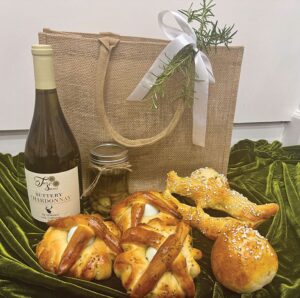
Sharon and I wanted to share this idea for a useful Mishloach Manot. If you don’t have time to bake, order some crusty fresh baguette and make your friends and family extra happy.
—Rachel
OJOS DE HAMAN
NORTH AFRICAN PURIM BREAD
Serves 12
12 eggs
1 egg, beaten for egg wash
Dough
7 cups all purpose or bread flour, divided
3/4 cup sugar
3 Tbsp active dry yeast
2 1/2 cups warm water
1/2 cup avocado oil
1 Tbsp salt
2 Tbsp anise seeds
Place 12 eggs in a medium pot and cover with cold water. Boil over medium heat for 12 to 15 minutes. Drain water and set aside.
In a large bowl, mix 2 cups flour, sugar, yeast and water and leave to bloom for 5 to 10 minutes until frothy.
When the mix is frothy, add the remaining flour, oil, salt and fennel seeds. Knead by hand or in a stand mixer.
When dough comes together, cover with plastic wrap and a dish towel and allow to rise for one hour.
Preheat the oven to 350°F.
Line a baking sheet with parchment paper.
Punch the dough down, then divide the dough. Make 12 equal balls the size of your palm.
Take the remaining dough, flatten it and cut into 24 strips to hold the egg in place.
Take a dough ball and poke a hole in the center, as if making a doughnut. Place an egg in the center and put it on the baking sheet.
Place two strips of dough into an “X” atop the egg. Use the beaten egg as glue to secure the strips to the egg and bread roll. If the strips slide, hold in place with toothpicks.
Brush top of rolls with egg wash.
Bake for 20-25 minutes.
Optional: For dark crust, mix one egg with one yolk and 1 tablespoon honey.
Sharon Gomperts and Rachel Emquies Sheff have been friends since high school. The Sephardic Spice Girls project has grown from their collaboration on events for the Sephardic Educational Center in Jerusalem. Follow them
on Instagram @sephardicspicegirls and on Facebook at Sephardic Spice SEC Food.