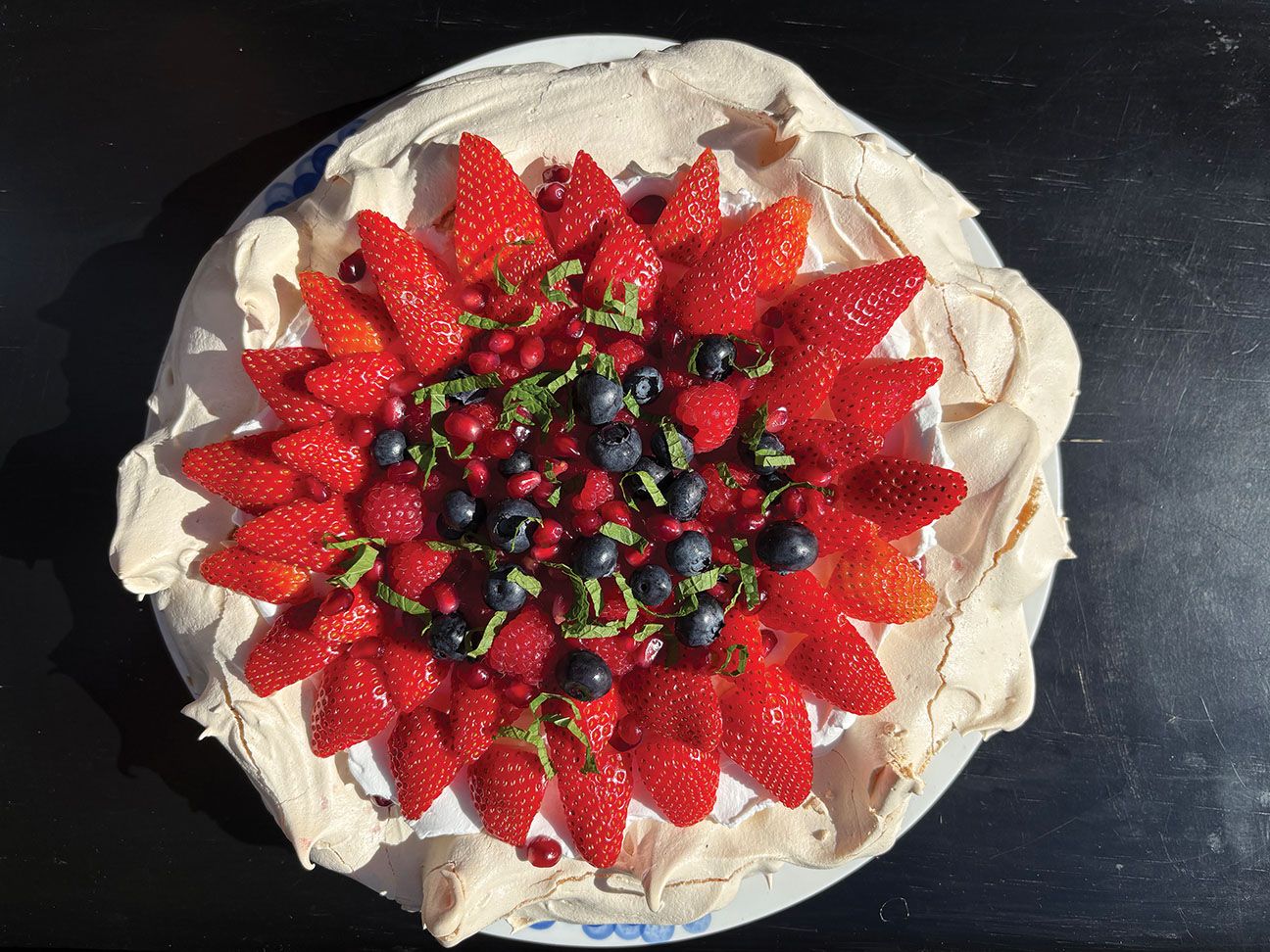
Perfect Treat for Jewish Day of Love
For this Tu b’Av, Sharon and I share this recipe for pavlova with wishes for sweetness in your life.
Friday night dinners at my grandparents house were epic. It was the early ’70s and everyone was young. I can still picture my uncles with their muttonchop sideburns and wide-collar shirts. My mother and her younger sister, my aunt Rebecca, were always fabulously fashionable with their layered blowouts and au courant miniskirts.
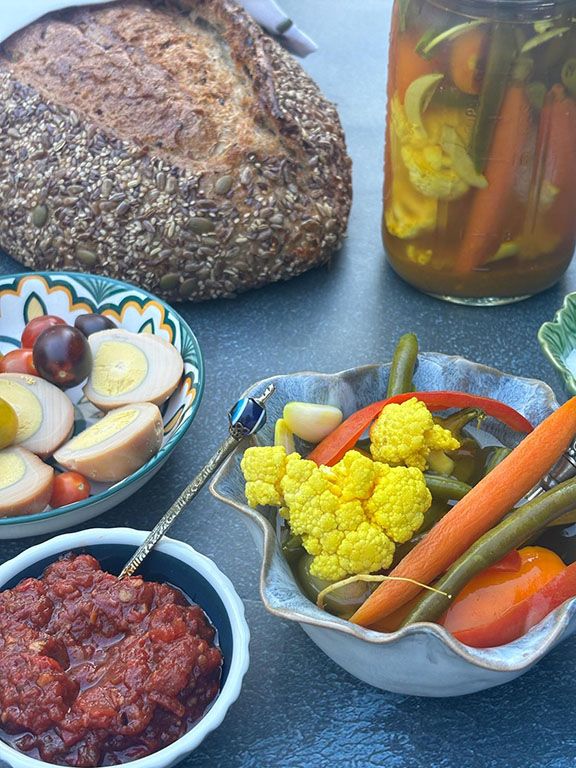
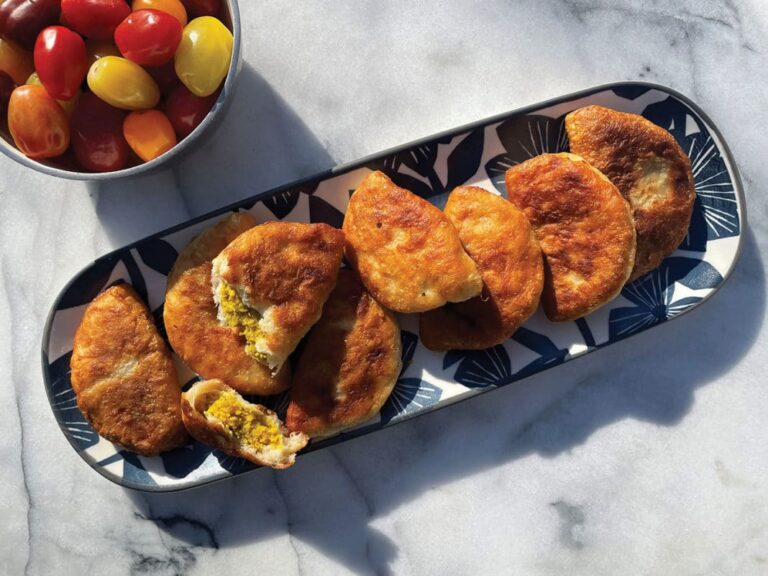
My grandmother would always cook up a storm. For the first course, she would serve z’lata, (Arabic for salad) and shallow fried, crispy kubbah bu’ral (a bulgur dough shell stuffed with a spiced ground beef, pine nut and sultana filling), alongside tehina and her homemade turshi (pickled cauliflower, green beans, carrots and peppers).
The main course was a veritable feast of roasted chicken, kubbah shwandar or kubbah bamia (semolina shells stuffed with ground beef or chicken served in a beet soup or a tomato-based okra stew) and pilau b’jij (rice steamed in a tomato and chicken broth) topped with caramelized onions, slivered almonds and fried golden raisins.
In the Middle East, the dessert course is often fresh fruit and a delicate sliver of flaky, honeyed, nutty baklava, which is often what my Nana Aziza served.
Honestly, after such a heavy meal who has room for more than that? Well, during those years in my grandparents Rose Bay dining room, a very Australian dessert became a family tradition. My aunt Rebecca perfected the art of the pavlova!
While the Aussies and the Kiwis may argue over who invented pavlova in the early 1900s, pavlova is an iconic and popular Australian dessert. Named for the famed Russian ballerina Anna Pavlova, pavlova is magical: a crispy, airy meringue shell with a soft, sweet marshmallow inside, topped with whipped cream and fresh fruit, especially strawberries.
My family’s love of pavlova has just grown for the past five decades. Every family gathering includes a pavlova on the dessert table.
For the recent Shabbat Chattan of my cousin Daniella’s son, her husband Yakov baked 10 sheet pans filled with meringue and joined them to form one long spectacular cream and fruit covered pavlova!
Whenever I host a Shabbat meal, I serve pavlova. Whenever I am invited for a meal, I volunteer to bring a pavlova. It is always an impressive and delicious way to end a meal.
There are some hard and fast rules for success in baking a beautiful pavlova. I use the freshest eggs and I separate them right out of the fridge (when the eggs are cold, the yolks are less likely to break). I allow the egg whites to come to room temperature to achieve the stiffest, most velvety and foamy meringue mixture.
Don’t rush the process — add the sugar slowly and bake in a low, slow oven. After baking for several hours, leave the pavlova in the oven to cool.
Obviously, fresh whipped cream is the most delicious topping. But a light layer of your favorite parve cream will do if serving after a meat meal.
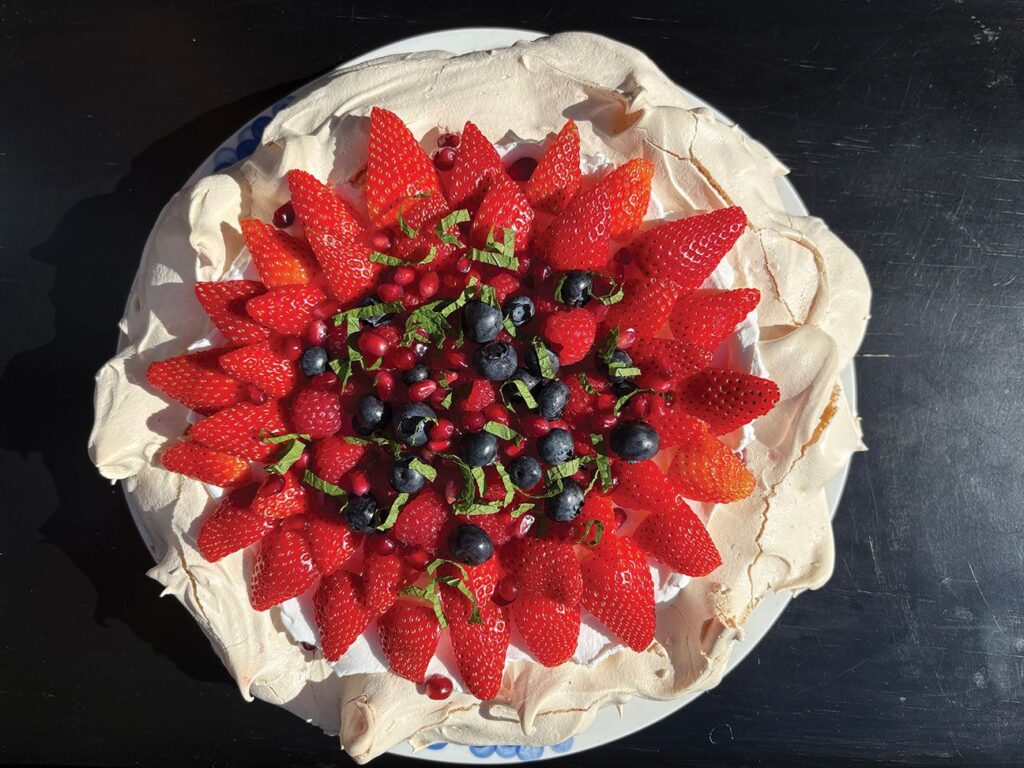
Per my obsessive-compulsive personality, I love to garnish my pavlova with a symmetrically decorative design. I use fresh strawberries and seasonal fruits, including raspberries, blueberries, passion fruit, as well as finely chopped mango, pineapple and mint. (I never decorate with kiwi, which is traditional because my mother, my daughters and I are allergic to it.)
I truly hope that you master the art of this wonderful dessert.
—Sharon
I didn’t grow up celebrating Tu b’Av, but once I learned about it, it stayed with me. Celebrated on the 15th day of Av, it is considered a day of love, connection and joy.
In ancient times, it was a festival of matchmaking, when young women wearing white would dance in the vineyards and the young men would come to watch them. There was something open-hearted about it — not flashy or forced, just hopeful and communal.
Tu b’Av is an especially popular holiday in Israel, where it has been embraced as a celebration of love. It is a popular day to get engaged. For others it is a day to light candles and enjoy dinner together. Or simply a reminder to slow down and appreciate the people they care about. (Just like America, you’ll see plenty of pink and red hearts and roses and lots of candy and chocolate!)
In Jewish tradition, sweetness always carries meaning. Honey for a sweet new year. Dates and figs for blessings. Cinnamon and rosewater for memory.
When we bake something sweet for someone, we’re not just feeding them — we’re blessing them. When we share dessert — we’re hoping for something sweet in their life.
For this Tu b’Av, Sharon and I share this recipe for pavlova with wishes for sweetness in your life.
—Rachel
Pavlova
8 egg whites, at room temperature
2 cups granulated sugar
Pinch of salt
1 teaspoon vanilla
6 teaspoons cornstarch
2 teaspoons white vinegar
Preheat oven to 350°F.
In the bowl of a stand mixer, beat egg whites at slow speed, until frothy.
Gradually pour the sugar with the mixer at a slow speed. Add the salt, then increase the mixer speed in increments, beating until the egg whites are thick and glossy.
Gently fold in the vanilla, cornstarch and vinegar.
Gently spoon the mixture onto a parchment lined ovenproof dish.
Lower the oven to 220°F and bake for 2 1/2hours. Leave in the oven for at least 3 hours.
Topping
2 cups heavy cream, whipped
Pint of strawberries, sliced
Raspberries
Blueberries
Pomegranate arils
Fresh mint, finely chopped
Fill center of pavlova with whipped cream.
Top with strawberries, raspberries, blueberries, pomegranate and fresh mint.
Sharon Gomperts and Rachel Emquies Sheff have been friends since high school. The Sephardic Spice Girls project has grown from their collaboration on events for the Sephardic Educational Center in Jerusalem. Follow them
on Instagram @sephardicspicegirls and on Facebook at Sephardic Spice SEC Food.